Resource Library

Practical tools, readings and prompts for families and educators to extend children’s everyday learning.
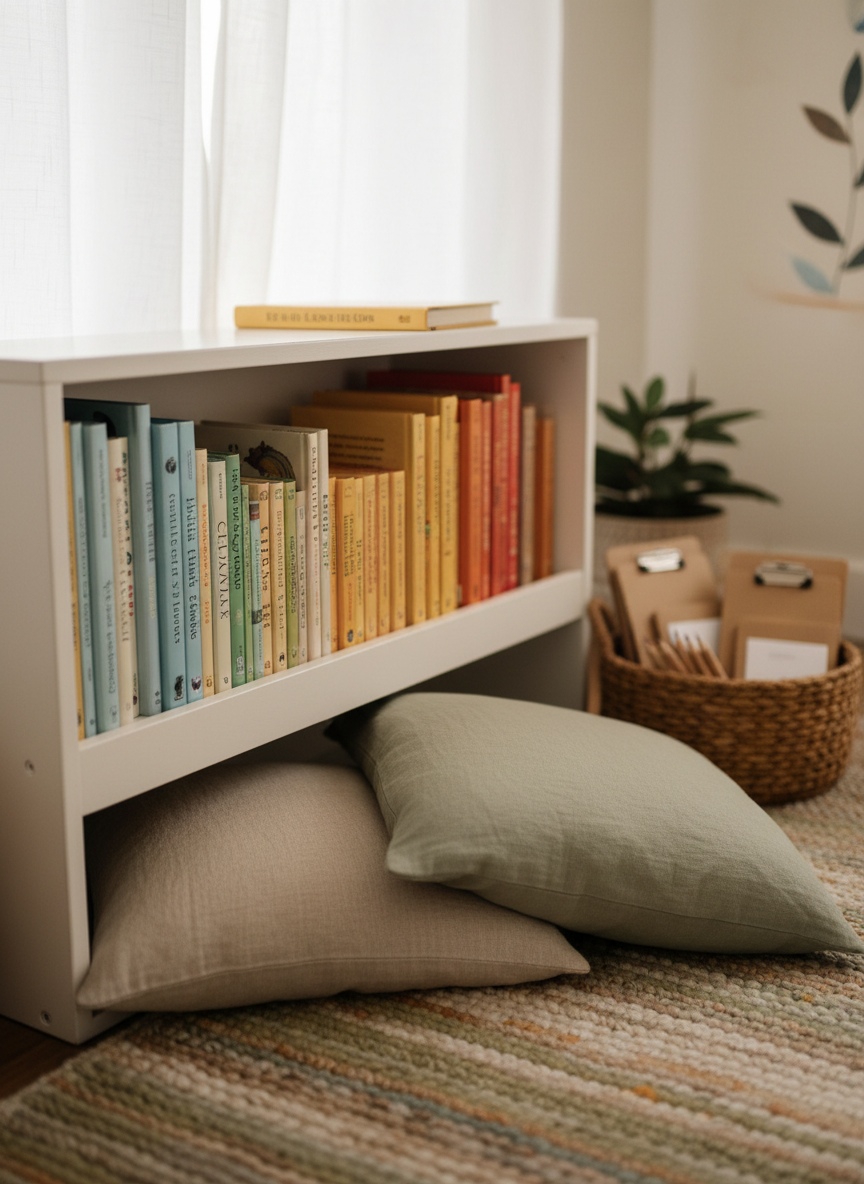
A close, eye-level photograph of a thoughtfully arranged early literacy nook in a preschool setting, emphasizing materials and environment rather than people. A low, white wooden bookshelf holds a curated selection of hardcover picture books with illustrated covers facing outward, organized by subtle color gradients. A thick, textured wool rug in muted earth tones spreads across the floor, with two large linen floor cushions inviting quiet reading. Beside the shelf, a small rattan basket contains clipboards, soft pencils, and blank booklets ready for emergent writing. Soft, diffused daylight filters through sheer curtains, creating a calm, warm glow and minimal shadows. The composition uses shallow depth of field, with the foreground books in crisp focus and the background softly blurred, conveying a reflective, nurturing approach to early literacy.
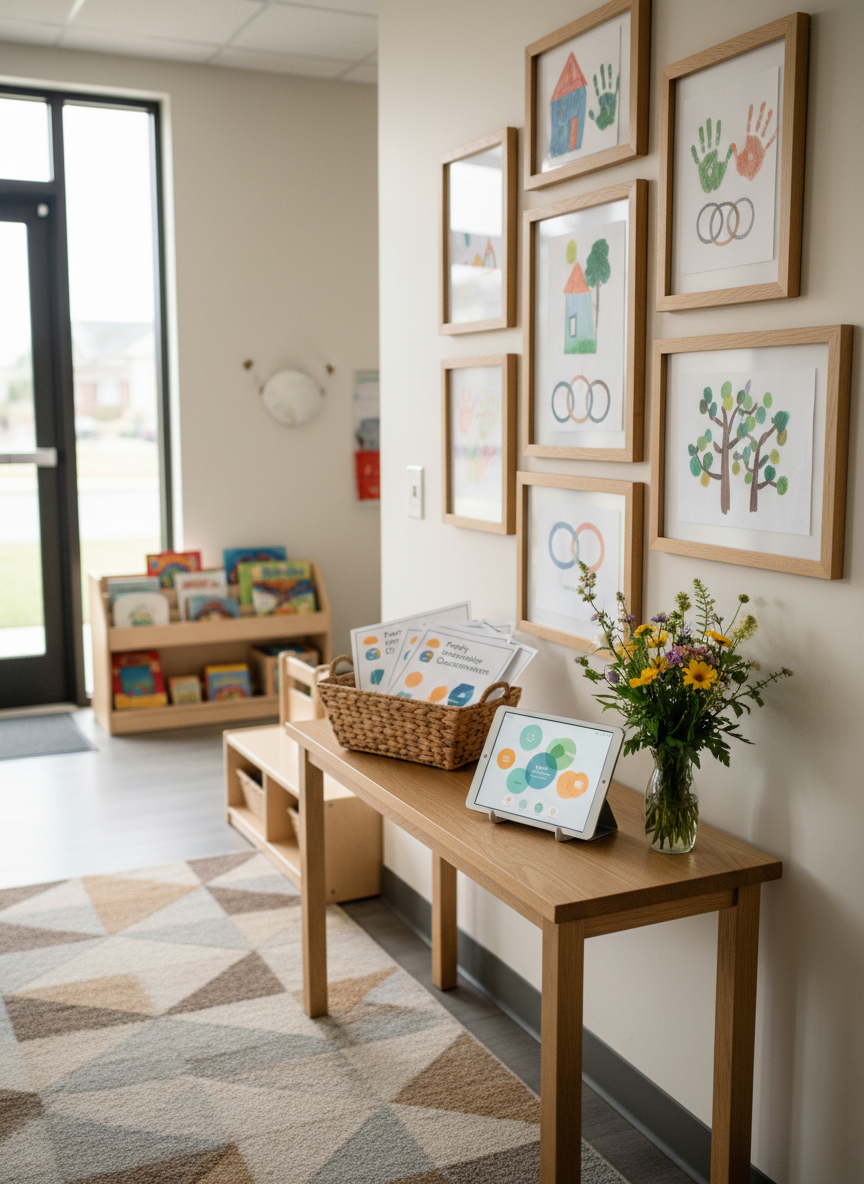
A welcoming early childhood classroom entry area that highlights partnerships with families and community, captured in realistic photographic style. A narrow console table made of light oak holds a woven basket of blank family questionnaires, a small vase of fresh seasonal flowers, and a tablet on a stand displaying an abstracted, text-free family communication app. Along the wall, a gallery of simple wooden frames showcases artwork, handprints, and symbolic family representations without any faces. Natural, overcast light from a nearby glass door softly illuminates the space, with minimal glare and gentle, even shadows. Shot at eye level with balanced composition, the scene feels inclusive, organized, and professional, emphasizing collaborative early learning relationships while deliberately avoiding visible people or readable text.

Resource Hub for Everyday Practice

Explore curated tools, readings and reflection prompts that sit alongside our blog posts. Use this hub to dive deeper into topics, try ideas in your setting, and share with colleagues or family.

Offerings
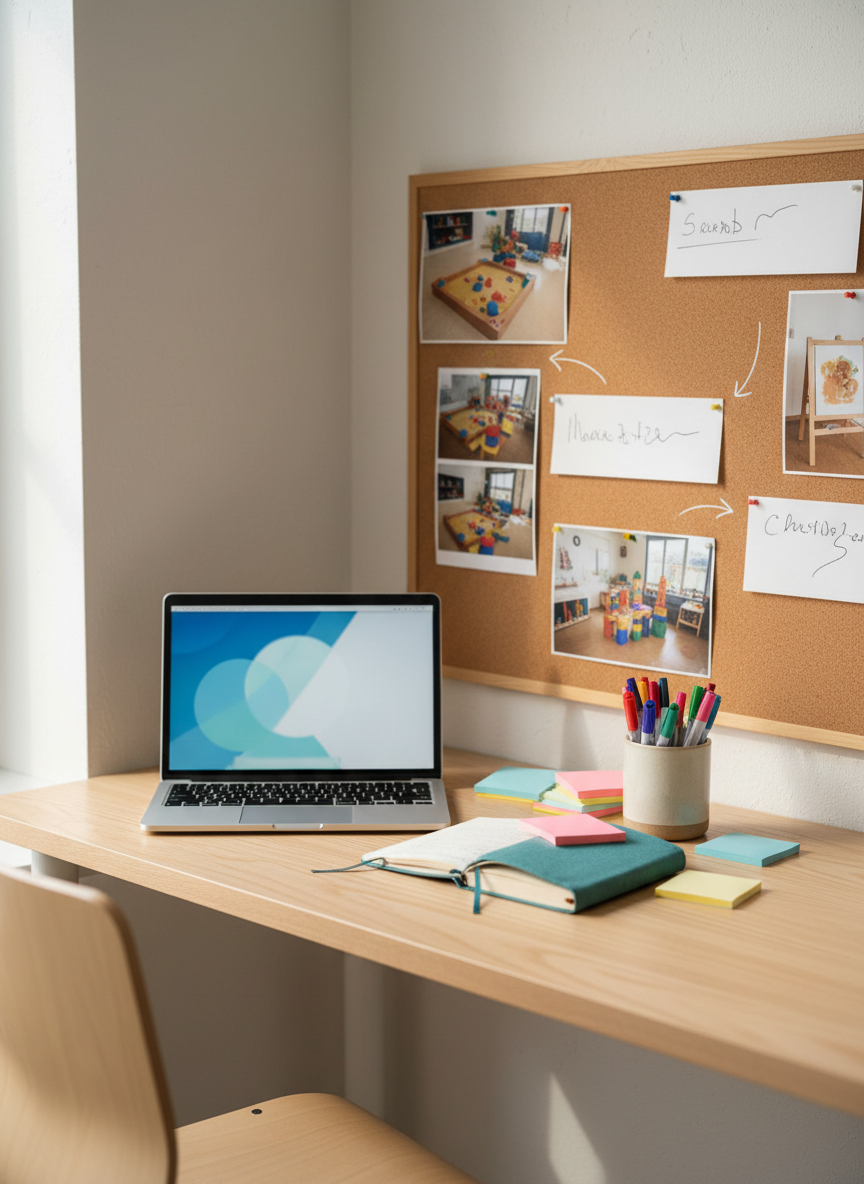
A documentation and reflection corner for early childhood educators, rendered in clean photographic realism. A simple birch desk stands against a pale, textured wall, holding an open laptop displaying a blurred, text-free planning screen, alongside a bound observation journal, pastel sticky notes, and a ceramic mug with colored pens. Above the desk, a corkboard features pinned, de-identified photo prints of children’s play environments and handwritten-style reflections that are indistinct and unreadable. Late morning natural light falls from a nearby unseen window, creating soft highlights on the wooden surface and gentle shadows under the desk. The composition is shot from a three-quarter angle with moderate depth of field, conveying professionalism, critical reflection, and organized practice in early education, without showing any human figures or legible personal information.

Collaborative workshops for educators and partners, exploring curriculum, documentation and reflective practice through real classroom examples.
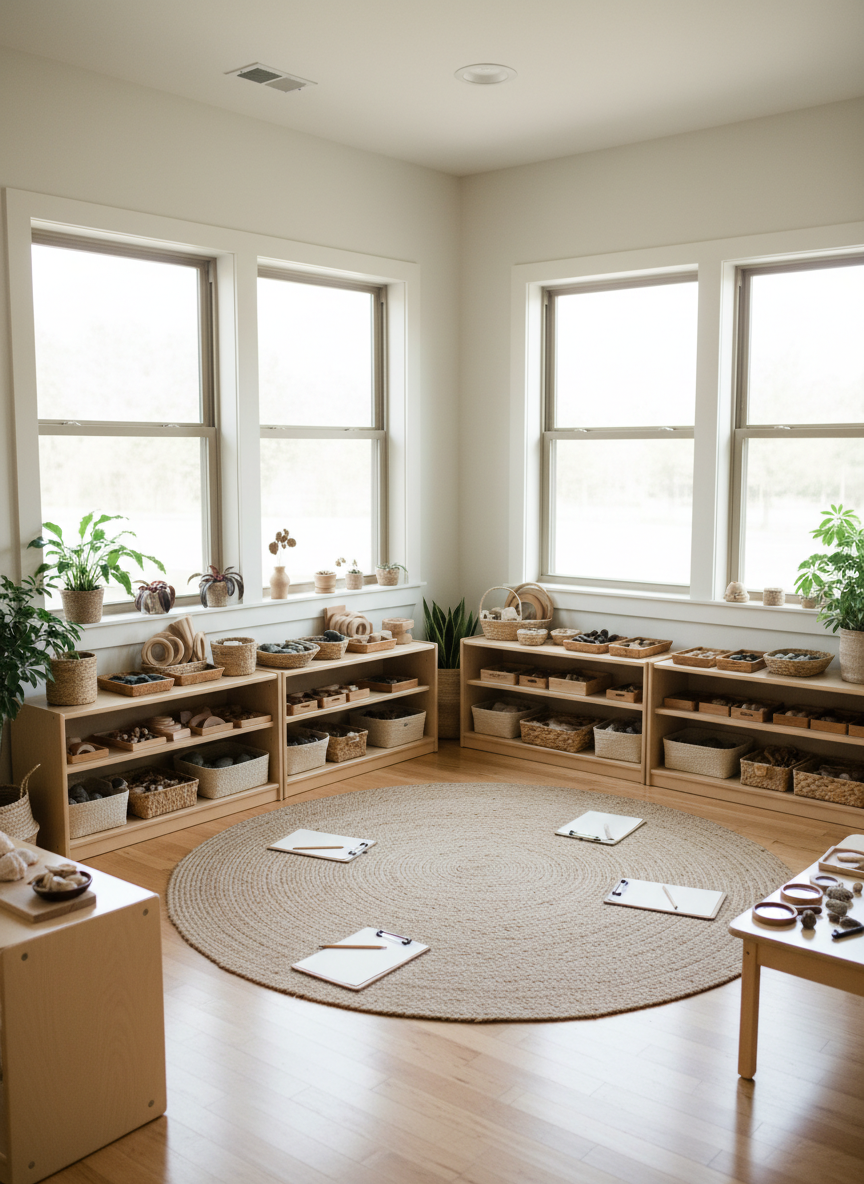
A sunlit early childhood classroom filled with natural materials and soft, neutral colors, photographed in clean, realistic detail. Low wooden shelves display woven baskets of wooden blocks, smooth river stones, and open-ended loose parts, all carefully arranged at child height. A round jute rug anchors the center of the room, with clipboards and blank paper inviting documentation of learning. Large windows line one wall, letting in diffused morning light that casts gentle shadows across the hardwood floor. Potted plants soften the corners, and a small table with magnifiers and shells suggests curious investigation. Shot at eye level with sharp focus throughout, the composition feels calm, professional, and inviting, emphasizing thoughtful early learning environments without any people present.

One-on-one mentoring and coaching to support team development, program review, and embedding critical reflection into daily routines.

Express Interest

Tell us what resources or professional learning topics would support your work with young children.

← Back

Thank you for your response. ✨